How to Delete a Google Review in 2026: A Business Owner's Guide
Report-and-appeal steps that actually work, the ask-the-author play that beats every form, why AI answers now read your reviews, and the volume math for the one-star that stays.

A fresh one-star landed on your profile this morning. No text, no name you recognize, and your average slid from 4.6 to 4.4 before the espresso machine finished.
The question every owner asks next is the same. What actually comes down, and how?
You can’t delete it, and neither can anyone you pay. Only two parties can make a review disappear: Google, when the review breaks Google’s published rules, and the author, who owns the delete button and sometimes uses it once somebody fixes their problem and asks properly. The Google path has grown real machinery over the past two years. A status tracker. A one-time appeal. Since this spring, a separate lane for extortion waves. And the review that’s brutal but honest won’t come down at all, which is why the back half of this guide is about winning without a delete button.
Can You Delete a Google Review?
Not if someone else wrote it: there is no button, no fee and no support line that deletes a review about your business. A Google review comes down three ways. Google removes it after a report, when it violates a content policy. The author deletes or edits it, sometimes because you fixed the problem and asked. Or it stays, and a reply plus fresher reviews change what it costs you. This guide works those three paths in order.
| The situation | The play |
|---|---|
| The review breaks a Google policy | Report it, track it, appeal once if refused. Days to weeks. |
| The author is reachable, the gripe fixable | Fix it, then ask them to update or delete. Often the fastest path. |
| It’s harsh, honest, and they’re done with you | No removal path. Reply for future readers, then outnumber it. |
That third row disappoints everyone who lands here, so it’s worth saying early: Google’s review policies protect the review system, not any one business’s rating. Everything below works inside that reality, and reviews matter enough to make the work worth doing properly.
Can a Business Owner Delete a Google Review?
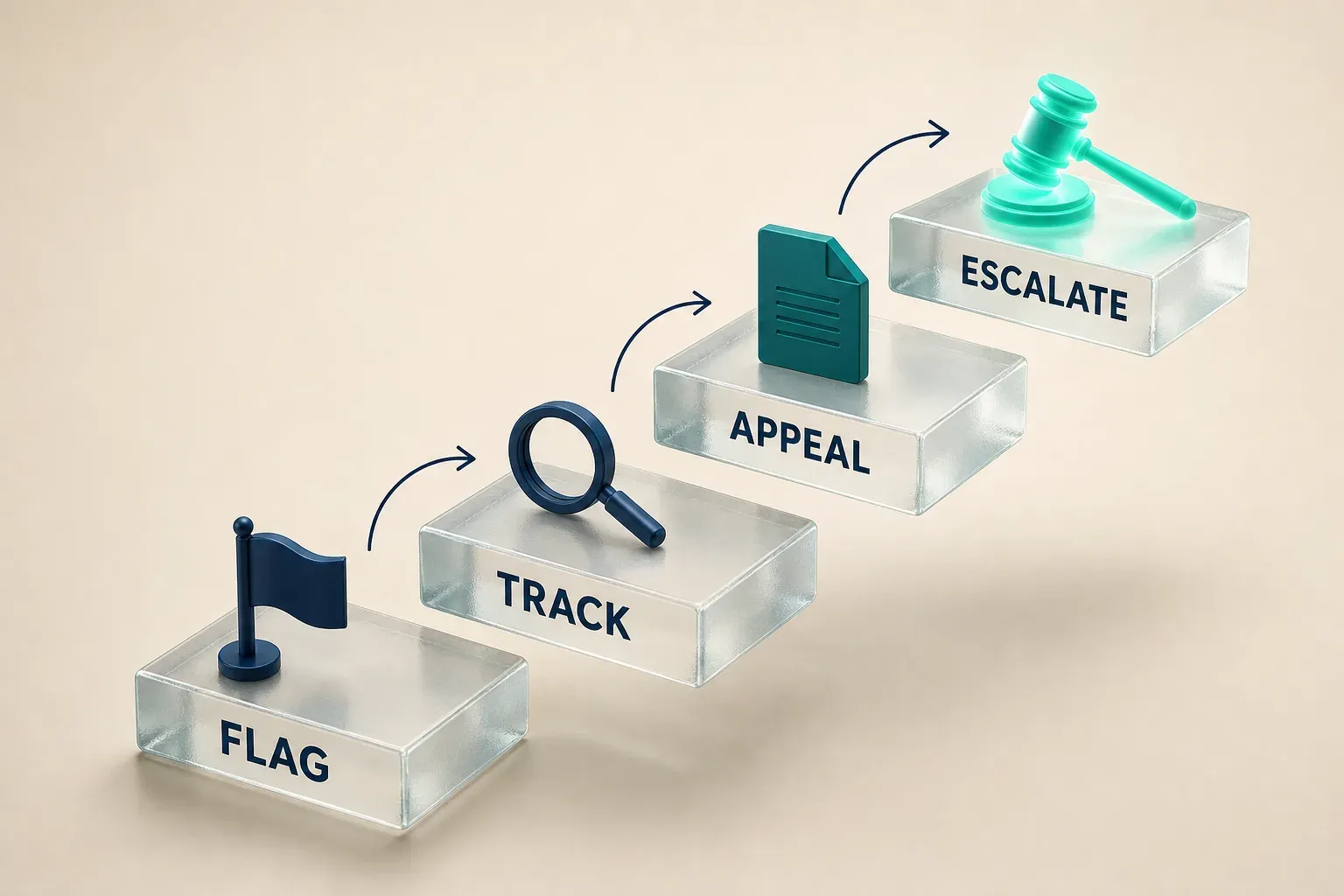
No. Owners get no delete button, and Google support won’t remove a review by phone, by chat, or for a fee. What an owner can do is report the review against a specific policy, track that report, appeal once if the answer is no, and escalate through two special lanes (extortion and court orders) when the situation earns it. All of it is free.
There’s an asymmetry worth accepting early: the reviewer holds a delete button, you hold a report form. That’s also the good news. For reviews rooted in a real complaint, the human route (fix the problem, then ask the author) removes more one-stars than any form ever will, and it gets its own section below.
Which Reviews Will Google Actually Remove?
Google removes reviews that violate its content policies: fake engagement, conflicts of interest, off-topic content, spam, restricted or illegal material, explicit or offensive language, harassment, impersonation and misinformation. It does not remove reviews for being unfair, exaggerated or bad for business.
Enforcement runs at industrial scale: in 2025, Google says it blocked or removed more than 292 million policy-violating reviews and cut posting rights for 782,000 accounts, most of that before anyone saw a word. Set those numbers against the billion-plus reviews Google published the same year, and roughly one submission in five never survived moderation. A success rate for owner reports, though, is a number Google has never published; the checker below is the honest substitute.
What the policies mean at street level:
- Fake engagement. Never-a-customer one-stars, bought batches, rating trades. It also covers reviews of your own business, so the rule cuts against astroturfing too.
- Conflict of interest. Competitors, current staff, ex-employees. A rival trashing you violates it, and so does your bartender’s five-star loyalty.
- Off-topic. Political speeches, someone else’s business, complaints about the rain. Google’s rule genuinely covers the reviewer who one-stars a seafood terrace because it rained on their vacation. The weather is not on the menu.
- Harassment, hate and personal info. Threats, slurs, a staff member’s home address. The fastest removals on the list.
- Spam. Links, coupon codes, phone numbers, identical text pasted across ten profiles.
- Impersonation and misinformation. Reviews written as someone else, or describing events that provably never happened.
One pattern runs through all six: Google judges what it can see on the page and in the reviewer’s history. It can’t see your CRM, your cameras or your certainty, and the moderators who field these cases keep repeating the corollary: a reviewer’s name proves nothing, because any Google account can carry any name. Removal cases are won with visible evidence, which is exactly what the next sixty seconds are for.
Will Google remove it? A 60-second triage
Pick the situation that matches the review. The verdict names the policy to cite, the realistic odds, and the next move.
Pick a situation and the verdict appears here.
Read all seven verdicts at once
- The reviewer was never a customer
- Report it as spam through the Reviews Management Tool. Google reads what is on the page, not your booking system, so the odds turn on what shows: a review describing a service you don’t offer, a different city, or a profile that one-starred twenty businesses in an afternoon. If the first pass fails, spend the appeal naming exactly what is visibly wrong.
- It came from a competitor or an ex-employee
- Against the rules on paper. The catch is proof: Google can’t see your HR files, so removal usually rides on visible signals, like a reviewer name matching a former staffer or details only an insider would know. Report it, then use the one appeal on the strongest visible evidence rather than the story behind it.
- It contains slurs, threats or someone’s personal info
- The strongest case on this list. Report it from your profile, and if the review targets a staff member by name, say so. These fall under the harassment and hate policies and tend to get handled faster than the rest.
- It’s clearly about a different business
- The off-topic rule covers reviews meant for someone else, and it hits businesses with common names all the time. Report it and point at the mismatch: they describe a drive-thru, you run a dental clinic. Google removes these routinely.
- It has links, promo codes or a political rant
- Reviews are supposed to describe a customer experience. Links, phone numbers, coupon codes and political commentary sit outside that, and the spam filters catch most of them without help. Report the ones that slip through; they rarely survive.
- A wave of 1-stars landed, then someone demanded money
- Don’t pay and don’t negotiate. Screenshot every demand, then skip the normal flag and use Google’s dedicated extortion report form, which routes to a team that investigates the whole wave. Google says its systems now block many of these before they publish; your evidence helps bury the rest.
- A real customer had a genuinely bad visit
- There is nothing to remove, and reporting it anyway burns a week you could spend better. Write a reply future customers will respect, fix what broke, and point your energy at volume: the calculator further down shows how many fresh reviews the recovery actually takes.
How to Remove a Google Review That Breaks the Rules
There are three ways to report a review, and they are not equal. Anyone can flag one from Maps or Search: open the review, hit the three-dot menu, choose Report review, pick a reason. Owners can also report from their Business Profile: open Read reviews, select Report next to the offender. Both routes work and neither tells you anything afterward.
The route that earns its keep is Google’s Reviews Management Tool, because it’s the only one that shows the report’s status and, later, the appeal button.
- 1 Open the Reviews Management Tool
Confirm the email address tied to your Business Profile and pick the business.
- 2 Select 'Report a new review for removal'
The tool lists the profile’s reviews; choose the one you’re contesting.
- 3 Pick the policy violation and submit
One report per review is enough. A pile-on of flags from staff accounts reads as coordinated manipulation, which is its own violation.
- 4 Track it
Come back to the same tool and open Check the status of a review I reported previously and appeal options.
Choose the violation that fits rather than the one that matches your blood pressure. A never-a-customer review is Spam. An ex-employee is Conflict of interest. A rant about your parking lot is, unfortunately, nothing at all. Reports aimed at the right rule move faster and set up a cleaner appeal.
It’s the same first move the forum moderators hand to owners week after week, here for two reviews aimed at the wrong business entirely:
“Have you reported them via the review management tool yet? […] I would start there and report them both as off topic. If Google does not remove them, the tool gives you an option to appeal.”
ElizabethRule, administrator, Local Search Forum, March 2026
How Long Does Google Take to Remove a Review?
Google’s official wording is that review evaluation “typically takes several days.” Owners comparing notes in business forums put a first decision at three to seven days, an appeal at one to two weeks more, and the unlucky backlogged case at a month or longer parked on Decision pending. Plan around two weeks end to end, read a longer silence as a queue rather than a verdict, and keep operating; reviews keep landing while you argue about one.
The status labels in the tool tell you where you stand:
- Decision pending. In the queue. Re-reporting doesn’t jump the line, it just files paperwork into the void.
- Report reviewed, no policy violation. The no. Also the moment the one-time appeal becomes available.
- Escalated, check your email. A human has the case, and the verdict arrives in your inbox.
Even the volunteers who escalate cases for a living wait in the same line:
“I have reviews that I reported in March, which are still pending a decision. […] Flag the reviews, wait for a decision, file an appeal, and then post in the help forum.”
keyserholiday, Google Product Expert, on the Local Search Forum, June 2025
What If Google Says No? The One-Time Appeal
Back in the Reviews Management Tool, open Check the status of a review I reported previously and appeal options, then Appeal eligible reviews. The form takes up to ten reviews in one submission (Google’s own wording: “You can select up to 10”), and the decision arrives by email. It is one shot per review, so load it with evidence and leave the adjectives at home:
- The exact policy, by name.
- The visible proof: a reviewer profile that bombs businesses in bulk, wrong-city details, a name matching a fired employee’s public LinkedIn.
- Screenshots where the form allows them, extortion demands above all.
Write it for a stranger with a checklist, because that’s who reads it.
When the tool itself misbehaves, which owners report more often than you’d expect (reported reviews falling off the status list, appeal buttons that loop back to the start), the working fallback is unglamorous: post in Google’s Business Profile Help Community, where volunteer Product Experts can push a stuck case back in front of Google. The moderators say it themselves:
“Create a post in the forum. The review management tool breaks all the time. PEs can usually help circumvent a broken tool and get the review in front of Google for another evaluation.”
Stefan Somborac, moderator, replying to an owner stuck in a broken appeal, Local Search Forum, February 2026
Review extortion has its own lane
A newer pattern deserves its own paragraph: a wave of one-stars appears, then a message arrives offering to make them go away for a price. Don’t pay and don’t negotiate. Screenshot every demand, then skip the normal flag and file Google’s dedicated extortion scam report, which routes to a team that investigates the whole wave, not one review at a time. Google’s April 2026 update says its detection systems now intercept many of these campaigns before the reviews ever publish, and profiles under suspicious spikes can have new reviews paused automatically.
Owners who’ve been through a wave add two habits: keep the blackmail out of your public replies, because a reply full of scam details can itself get flagged as off-topic (a flat “we have no record of this visit” does the job), and report the attacking profiles themselves in the Maps app rather than only their reviews.

The court-order route
The slow lane, and occasionally the right one. If a court rules a review defamatory, Google will act on the order. Between filing fees and months of process, it fits provable, serious damage, and almost nothing else. A lawyer’s letter to the reviewer sometimes ends things early. A lawyer’s letter to Google ends up in a very large pile. Geography shifts the odds as well: German courts, for one, make Google ask the reviewer for proof the visit happened before the review can stand.
Getting a Google Review Removed by Asking the Author
The one person who can delete a review in about a minute is the person who wrote it. For reviews rooted in a real, fixable failure, direct outreach removes more one-stars than the report form ever will, and it’s the only removal path that also wins the customer back. One rule before anything else: no bribes. Offering money, discounts or freebies to change a review violates Google’s policy and, in the US, the FTC rule covered further down.
Finding the author starts and ends with your own records. Match the display name against bookings, orders and email threads; reviews usually land within days of the visit, so search that window first, and remember that a fair share of these people already complained once through a normal channel. If nothing matches, don’t go detective. Reverse-searching avatars and messaging strangers on personal accounts turns a bad review into a story about being hunted by a business, and that story always outranks yours. When you can’t reach them legitimately, the public reply becomes the outreach. You can also run this play while a report sits in Google’s queue; the two don’t touch.
The sequence that works is unglamorous:
- Fix the actual problem first. An apology with nothing behind it reads as reputation management, because it is.
- Reach out privately. Phone beats email, email beats DM. Acknowledge what went wrong and say what changed, with no legal tone and no defense of the indefensible.
- Then make the one ask. Something like: “If you feel we’ve made it right, would you consider updating or removing your review?” And stop talking.
- Make it effortless. Most people have never edited a review and won’t go hunting for the button.
The opening line decides most of it, and the right opening changes with who’s on the other end:
The outreach playbook, by situation
Four openings for four different reviewers. Every script assumes the fix already happened; none of them mentions compensation, because trading anything for a review change breaks Google policy and, in the US, federal law.
The warmest case there is. They wanted the visit to work and it didn’t, and the review is a complaint that gave up on being heard. Your job is to prove it was heard.
- Fix the problem before any contact. The call where the fix already happened is a different call.
- Use the channel they used with you: the booking phone number, the order email. Familiar beats formal.
- Name the failure precisely. Specifics prove a human actually looked; vagueness reads as damage control.
- No ask in the first contact. The review question comes later, once they’ve felt the fix.
Hi [name], this is [your name] from [business]. I read your review and you’re right about what happened on [day]: [the specific failure]. We’ve since [what changed]. No ask here, I just didn’t want you thinking it disappeared into a void. If you’re ever open to letting us try again, I’d like the chance to make it right.
If they respond warmly, that is the moment for the one ask: would they consider updating or removing the review. If they don’t respond, one gentle follow-up a week later, then stop.
A bare one-star from a name you don’t recognize. You can’t negotiate with a ghost, and playing detective across the internet is the one move guaranteed to make things worse. When you can’t find them legitimately, the public reply is the outreach.
- Search your own records first: bookings, orders, invoices, email threads. Reviews tend to land within days of a visit, so check that window.
- If nothing matches, reply publicly and keep it neutral. It might be a mistap, a name-twin business, or a real customer under a different name.
- Never reverse-search avatars or message people on personal accounts they didn’t give you. That turns a bad review into a story about being hunted by a business.
We’d like to understand what went wrong, but we can’t match this to a visit. If we’ve served you, please reach us at [email or phone] and we’ll fix what we can. If this was meant for a different business, we’d be grateful for a second look.
Silence for two weeks plus no record of the visit strengthens a fake-engagement report; the checker earlier in this guide covers that route.
Long and angry means engaged, and engaged means recoverable. The rant is a list of everything that mattered to them. Treat it as the agenda, not the attack.
- Answer the emotion before the facts. One sentence that names what the experience felt like buys more goodwill than three paragraphs of explanation.
- Concede their strongest point completely instead of litigating all of them. Partial defenses read as full denial.
- Take the fix private, then return public with the outcome. Future readers should see the ending.
- Ask about the review once, only after the thing is genuinely resolved.
You clearly left frustrated, and reading your review back, I would have too. You’re right about [their strongest point], and I won’t defend it. I’d rather fix it than argue: could we talk on [phone or email]? Whatever happens with the review, [the specific thing] is already changing because you flagged it.
If it becomes clear they want the fight more than the fix, exit: one calm public reply written for future readers, and done. Two contact attempts is the ceiling.
The moment payment is demanded for a review change, the negotiation is over, because it was never one. That’s extortion, and paying doesn’t close the case; it prices your profile for the next round.
- Don’t pay, don’t counter, don’t debate. Any response to the demand confirms the pressure works.
- Screenshot every message with sender details and timestamps before anything gets deleted.
- File Google’s dedicated extortion report covered earlier in this guide, not the ordinary flag.
- Keep the demands out of your public reply entirely; a reply full of scam details can itself get flagged as off-topic.
We have no record of a visit matching this account. If we’ve genuinely served you, please contact us at [email] and we’ll look into it.
Google’s April 2026 systems intercept many of these waves before they publish, and documented reports help kill the rest. The one lever extortionists have is your fear of the stars.
What you forward them, word for word: open Google Maps signed in, tap your profile picture, open Your contributions, then Reviews, hit the three-dot menu next to the review, and choose Edit review or Delete review.
An edit often beats a deletion, by the way. A review that ends with “the owner reached out and fixed everything” is proof of character that a spotless 5.0 can’t fake, and future readers weigh it accordingly. Ask once, thank them whatever happens, and let it go; chasing a reviewer twice turns a fixable complaint into a screenshot.
Do Google Reviews Influence AI Recommendations?
Directly. When someone asks ChatGPT, Gemini or Google’s AI Mode for “the best dentist near me,” the answer is assembled from the review corpus: your rating, your volume, how recent the last dozen reviews are, and the actual sentences inside reviews and owner replies. Google’s own Maps grounding for AI feeds assistants live data on 250 million places, explicitly including “context from Google Maps user reviews.”
The audience is enormous: Gemini passed 950 million monthly users in July 2026, and Alphabet’s earnings calls put AI Overviews above 2 billion. Which rating thresholds these assistants actually favor is a longer subject, covered in the guide to ranking higher in ChatGPT recommendations.
That changes what a negative review costs. A search result shows a 4.4 and lets the reader decide. An AI answer reads the one-star, notices nobody responded, and may hand the user a summary like “some customers mention billing surprises” without your side of it ever entering the record. The reply is the only part of that exchange you get to write, and the models read it: put a calm, specific response under a harsh review and the record shows the story continued, while a blank space lets the one-star speak for the whole relationship.

When the Review Won’t Come Down: Reply, Then Outnumber It
An honest bad review is not a removal case. It’s a permanent piece of your profile, which makes it a marketing surface, and two moves determine what it does to you: a reply that changes how the story reads, then enough new reviews to change what it weighs.
That reply is for the silent audience, the hundreds of future customers who’ll skim it long after the author has moved on. Keep it to four sentences: thank them, own the fixable part, say what changed, take the rest offline. No lawyering, no public discounts. Pluspoint’s guide to handling bad reviews has full scripts for the awkward cases.
Then comes arithmetic. A one-star takes its author ninety seconds of righteous typing. Undoing its pull on your average is a volume game, and the volume runs bigger than most owners guess.
How many 5-star reviews to climb back?
About 72 new 5-star reviews to reach 4.5.
Straight arithmetic on the average. Google displays one decimal, so the flip can come a few reviews early or late.
Seventy-two five-stars sounds like a year of hoping. At businesses that ask, it’s more like a quarter. The mechanics are boring on purpose: a QR code by the register, a message shortly after each visit while the experience is still warm, and somebody actually answering what comes in. Pluspoint, a review management platform, automates that whole layer through its review management tools: review invites over SMS and WhatsApp, unhappy customers caught in a private form first, reply drafts as reviews land, and monitoring across Google plus 13 other review platforms, from $29 per location per month. A spreadsheet and discipline can do it too; the customers you ask won’t know the difference.
One pacing note: Google’s spike detection watches velocity, so a profile that jumps from four reviews a month to forty in a week can get new submissions paused outright, a freeze owners report running about thirty days. A steady drip beats a blitz.

What Not to Do
Every move on this list feels productive in the moment and costs more than the review did:
- Buying fake positives to bury it. Since October 21, 2024, the FTC’s fake-review rule carries civil penalties of up to $53,088 per violation, and each fake review counts separately. The UK’s DMCC Act followed in April 2025 with fines reaching 10% of global turnover. Twenty bought reviews used to be a shortcut; now they’re a liability with a decimal point, on top of the older ways buying reviews backfires.
- Paying a “guaranteed removal” service. Nobody outside Google can delete a review, which makes this an entire industry resting on the word “guaranteed.” Honest ones fill in the same free forms you just read about; the rest post the fake positives from the bullet above, with your name on the invoice. And when Google catches an agency’s mass-flagging scripts, the suspension lands on the client’s listing, not the agency.
- Rage-replying. The review might outlive your anger; the reply definitely will.
- Setting staff review quotas. Google’s April 2026 policy update explicitly banned directing employees to hit review targets or to solicit reviews naming specific staff. Incentivized reviews were already banned by Google and the FTC both.
- Mass-flagging from friendly accounts. Ten flags from your team’s Gmail accounts add no weight. They add a manipulation pattern to your side of the ledger.
FAQ
Can a business owner delete a Google review?
No. There is no delete button on someone else’s review and no fee that produces one. An owner can report the review, and Google removes it only when it breaks one of Google’s content policies: fake engagement, conflicts of interest, harassment, spam and the rest. If the review is honest but negative, the working tools are a public reply and a steady stream of newer reviews.
How does a customer delete a Google review they wrote?
In Google Maps, signed in to the account that wrote it: Your contributions, then Reviews, then the three-dot menu next to the review, then Delete review. It takes about a minute. For a business owner, that’s the play behind asking the author: once the problem is genuinely fixed, forward those steps so the delete (or an updated rating) costs the customer nothing.
How long does it take Google to remove a reported review?
Google’s official wording is that evaluation typically takes several days. In practice, clear-cut spam tends to vanish within a week, while borderline cases can sit at Decision pending for two weeks or more. Track the report in the Reviews Management Tool instead of refreshing your profile; once the verdict says no policy violation, the one-time appeal opens.
Can you pay to have a Google review removed?
No. Google has no paid removal channel at any price, and neither does anyone else. Services selling guaranteed deletion resell the same free report-and-appeal forms covered in this guide, and the reckless ones post fake positive reviews instead, which the FTC’s 2024 rule can penalize at up to $53,088 per fake review.
What if the reviewer was never a customer?
Report it under spam and fake engagement. Google evaluates what it can see rather than your booking records, so the odds ride on visible evidence: a described service you don’t offer, the wrong city, a reviewer profile that one-stars businesses in bulk. If the report fails, use the appeal to list those specifics, and post a public reply noting you have no record of the visit.
Why did a Google review disappear on its own?
Google’s filters blocked or removed over 292 million policy-violating reviews in 2025, and they run before publication, after it, and retroactively: owners report years-old, low-detail reviews vanishing in later sweeps. Reviews also vanish when the author deletes them or the author’s account gets restricted. And since 2026, Google can pause new reviews entirely on a profile hit by a suspicious spike, with a notice shown on the listing.
Can I sue over a fake Google review?
It’s possible and occasionally the right call, but it’s the slow lane. A defamation case takes months and real money, and Google acts on court orders rather than lawyer letters. It fits situations with provable, serious damage from provably false statements. For everything short of that, the report, the appeal and fresh reviews move faster.
The report form takes four minutes and the appeal maybe ten. Most owners spend longer than that drafting the furious reply they shouldn’t send. File first, reply like the future customer is watching, and let the next fifty reviews do the heavy lifting. And if somebody one-stars you over the weather, well, now you know where the off-topic flag lives.